WITH A HEART ON THE HILL AND IN THE MINE
30th Meeting of Mining Towns and Municipalities of the Czech republic 19th European Day of Miners and Metallurgists
12 - 14 June 2026 in Příbram
20. November 2025
History of mining in Příbram
Příbram is a town whose past is inherently linked to mining. It was thanks to mining that the small settlement became an important industrial and later educational centre. Mining influenced not only the economic development but also the appearance and character of the entire region.
The origins of mining
The first traces of mining activity in the vicinity of Příbram date back to the Iron Age. The Celts mined lead, silver, iron and gold here - and they are considered to be the founders of the mining tradition in the Příbram region. Systematic mining began in the 14th century, as evidenced by a document from 1311 on the handover of the smelter to Bishop John IV.
In the 16th century, mining reached its first peak. In 1579, the Emperor Rudolf II promoted the mine to the rank of the first mining company. Příbram became a royal mining town in Rudolstadt in 1879, which brought prestige and further development to the town. However, this did not last long - plague epidemics and the depletion of surface deposits led to a decline in mining. It was not until after the Thirty Years' War that iron mining was revived and in the 18th century, thanks to the metallurgist Jan Antonín Alis, silver ore mining flourished.
The golden age of the Březohorské hory district
The real boom came in the 19th century. Březové Hory became one of the most important ore mines in the whole monarchy - in the second half of the century, 97% of all silver in Austria-Hungary was mined here. In 1875, a world record was set when miners at the Vojtěch mine reached a depth of 1,000 metres using a single mining rope.
At the same time as mining, metallurgy developed and a new smelter was established, which later became the present-day Příbram Metallurgical Works. The population and the importance of the town grew and it acquired a modern face. The church of St. Vojtěch and a new school were built in Březové Hory, and the mining headquarters in Příbram was built in the Empire style.
The Mining Academy and the tragedy at Marie Mine
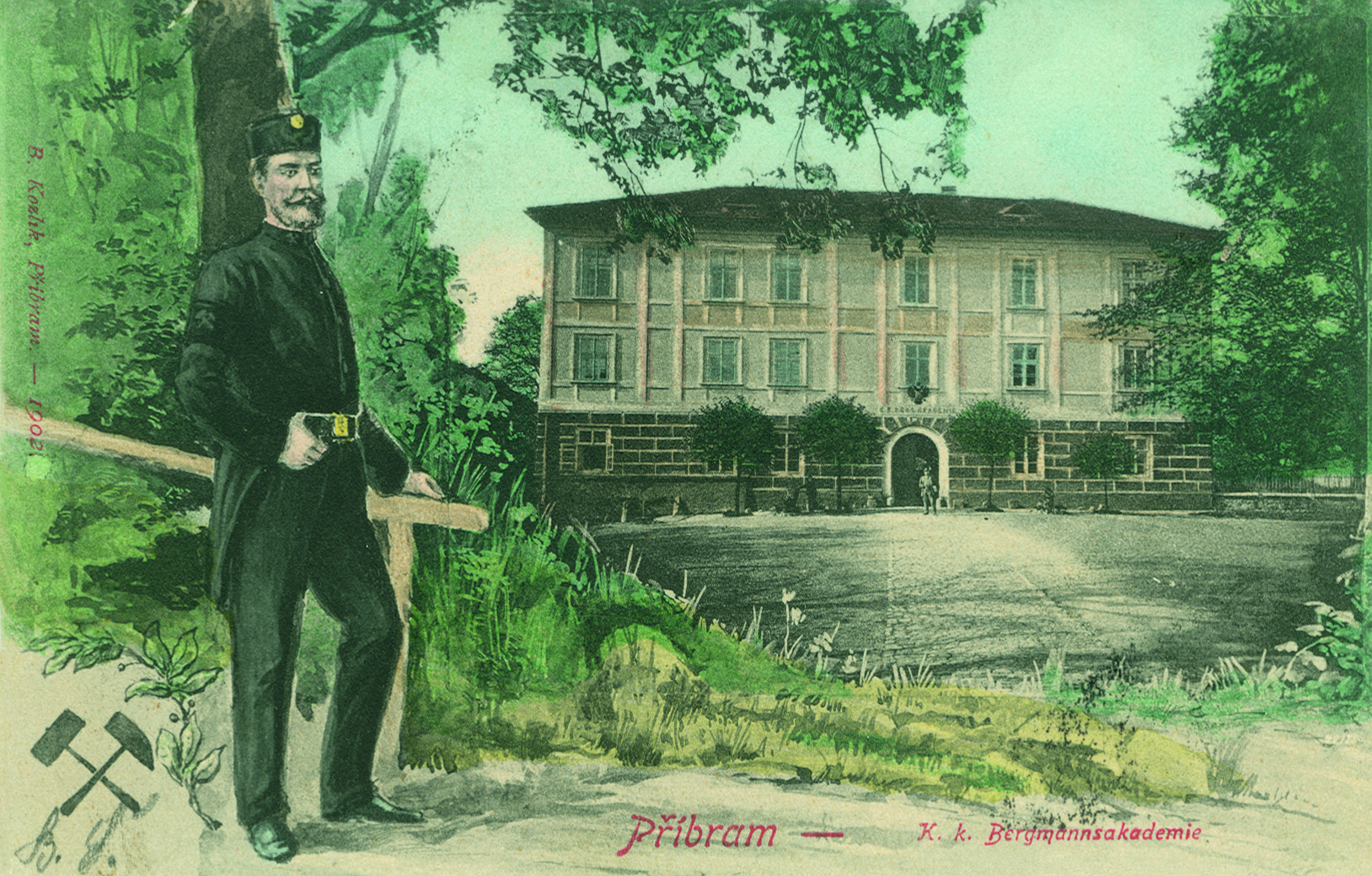
In 1865, the Mining Academy was founded in Příbram, which three decades later became the Mining University. The town thus became a centre not only for mining but also for the education of mining professionals.
However, the end of the 19th century brought tragedy. In 1892, the Marie Mine suffered the worst mining accident ever in Europe, killing 319 miners. Together with the economic crisis, this marked the beginning of the decline of silver mining.
From silver to uranium
After the Second World War, silver mining gradually came to an end, but a new chapter began - uranium mining. From 1947 onwards, geological surveys were carried out and the first uranium mines were built in the vicinity of Vojna Hill. Uranium mining changed the face of Příbram fundamentally - new flats, schools, a cultural centre and the Nový rybník recreational area were added.
Unfortunately, a dark chapter of history is also connected with mining - the Vojna labour camp, where political opponents of the communist regime were imprisoned in the 1950s. Today, there is a memorial on its premises and an exhibition of the Mining Museum dedicated to the period of persecution and uranium mining.
The end of mining and the preservation of traditions
Uranium mining ended in 1991, bringing to a close more than six centuries of the town's mining history. Nevertheless, mining buildings and technical monuments are still an important part of Pribram's identity today.
The Příbram Mining Museum, founded in 1886, preserves the heritage of this history. It offers tours of the Anna, Vojtěch, Drkolnov and Ševčinský mine complexes, a ride through the underground tunnel and demonstrations of mining technology.
Mining traditions are also carefully maintained by the Prokop Society and the Guild of Příbram Miners and Metallurgists, which are committed to commemorating the town's glorious past.
Fotogalerie
General partners


Main partners








Partners










Media partner

Event organizers